

The current state of things
We live in a world that proclaims to provide more ‘instant gratification’ than ever before – yet we are often left feeling a sense of deep unfulfilment – how can both statements be true? It may well be the case that the seeking out of ‘instant gratification’ is deepening our dependence on external factors to drive our state.
Whether it’s the way that someone has interacted with you, the day you have had at work or even someone cutting you off on the drive home, we are quick to attach our state of being to the circumstances we are in – this is only natural in a society more inter-connected than it has ever been before.
Somewhat counterintuitively to the above statements, we at Mera believe the only one factor involved in your state of being, is, well… you. Yes, we are all composed of various often conflicting inner voices, so the first step is to take a step back and analyse our thought process for what it really is.
Are your worries beyond your control?
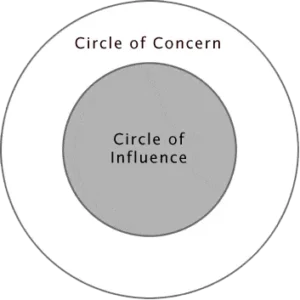
In his book ‘The 7 Habits of Highly Effective People’, Stephen Covey draws a distinction between the circle of influence and the circle of concern. The circle of concern covers those facts of life that are indeed beyond our direct control; the state of the economy; the way people drive; the weather and so on. The circle of influence, on the other hand, relates directly to things that are within your control: how you respond to situations, the actions you take, the way you interact with those around you, and so on.
An important step towards managing stress is to recognise what is within your control versus what is beyond it and to act on this information.
How can I act on this information?
Simply put – your energy should be spent on your sphere of influence. You can’t control whether or not someone cuts you off while driving, but you can control how you respond when they (inevitably) do. This principle can be applied throughout your life:
You may not be able to stop a bad situation from happening, but you have agency over your response to such a situation.
The circle of things you can affect grows
You may wonder why Covey calls it a circle of influence specifically? Well, your response to situations and people can influence future behaviour. How you respond to a friend, colleague or family member has the potential to influence not only their behaviour but also your relationship to them (for better or for worse).
One’s sphere of influence changes over time. Covey states that, by focusing on those things that you can influence, this circle of things you can affect grows. Maintaining a calm demeanor in the face of adversity, only acting on those things you can change, deems you a trustworthy and effective decisionmaker. In turn people will begin to trust you in difficult situations, widening your influence on outcomes that affect your life and your confidence in doing so.
Conclusion
An unavoidable fact of life is that you will be presented with stressful situations. There may well be nothing you can do to prevent these situations from happening, but how you respond is within your grasp. Focus your energy into how you respond to stressful situations, ensuring that you prioritise what you can do. By focusing on what you can control, you may well find a cascade of positive feedback, ultimately resulting in your ability to better manage stress and, by extension, the influence you have on your environment.
